Showing posts with label side. Show all posts

Sunday, February 21, 2021

Okra Indian style

Rich said he hated Okra when I first met him . He said he used to eat boiled okra with salt and it was quite slimy and disgusting . I said my Indian okra would change his perception of this vegetable . I have loved okra ever since I was young. It is one of my favourite vegetables . My mom used to sauté the okra with just a few spices and I ate it with rice as a side dish. Once I made this version of okra, Rich was an okra convert! He now asks for this dish all the time.

Ingredients 
Okra - 30 ( or whatever you have - fresh is better than frozen but you can use frozen if that’s all you have )
Tip : to ensure the okra is not too ripe ( which makes it fibrous and unedible - try to break the tip off the okra with your hands and if it doesn’t break then do not pick that one !!) 

Turmeric powder - 1/2 tbsp 

Sambar powder - 1.5 tbsp ( you can get this powder at an Indian store or online) - this can be spicy so use a little bit at first and then based on taste you can add more 

Salt - to taste 
Vegetable oil - 2 tbsp 

Instructions 
1. First wash the okra and dry it on a paper towel. This reduces the sliminess of the okra 
2. Then cut both ends off ( the tapered tip and hard stem)
3. Then cut okra into thin ( but not too thin slices). I’m linking a video here on how to cut  okra 
You can follow the instructions but cut the okra a little thinner than in the video as shown below 

4. Take a sauce pan and place on the stove on medium heat 
5. Add a tablespoon of oil and let it heat up for about a minute ( don’t let it heat up too long and get smoky - this means it is overheated and you can burn your vegetable )
6. Now add the okra to the oil and sauté it
7. After initially sautéing it move the okra to the sides and make a little open area on the middle 
8. Put about 1/2 tbsp of oil in the middle . This is to roast the spices in since in IT IS ALWAYS IMPORTANT TO ROAST THE SPICES TO ENSURE IT DOESN’T TASTE RAW !! ( I only emphasise this because in American restaurants and cooking shows people just add raw spices to the dish , like adding curry powder at the end of cooking a dish as they take it off the stove - this gives an awful bitter raw taste !!!!). Add the sambar powder , turmeric powder and salt to this oil and mix it in.
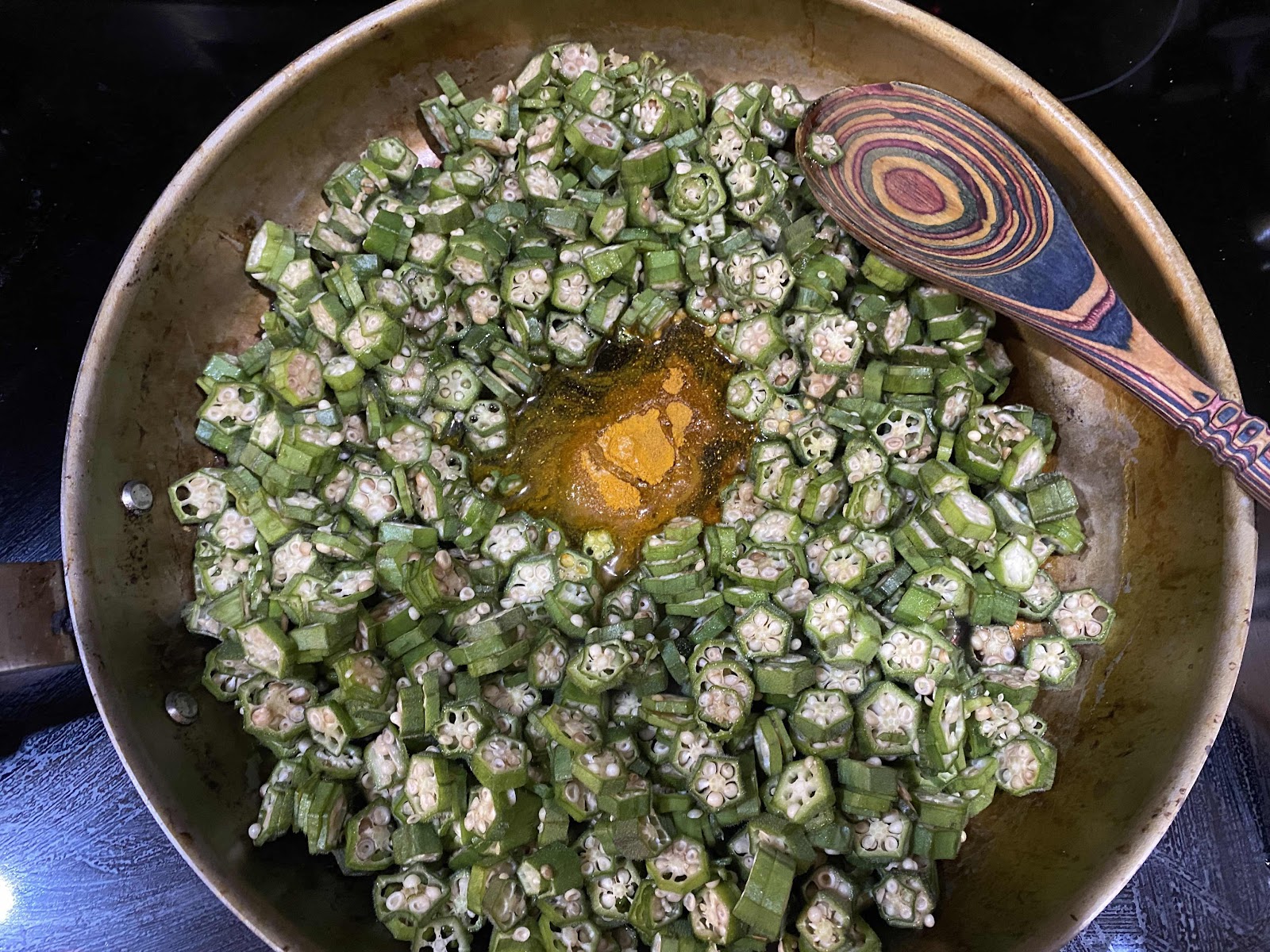
9. Now once the spices are roasted ( 30 sec) then mix it in with the okra well and sauté it 
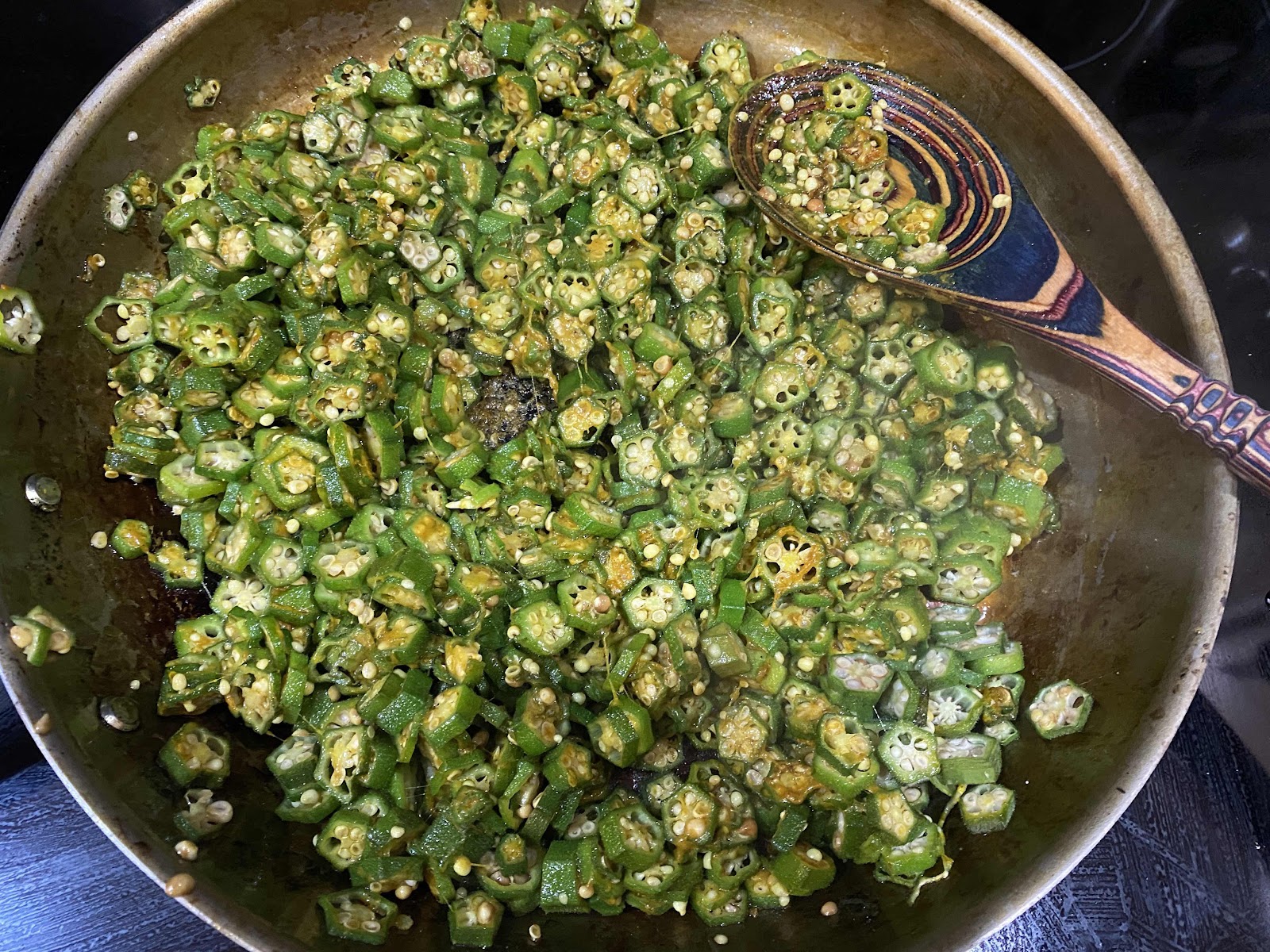
10. Keep sautéing it so it doesn’t stick to the bottom. You can add a little water ( just sprinkle some) so as to prevent the spices and okra from sticking to the pan. 
11. Periodically sauté and turn over the okra to prevent it from burning 
12. It takes about 10-12 minutes to cook through and also get roasted . The green color is still maintained but there is a little char on it. 
13. Taste it and add salt to taste. If you want to add more spice repeat step 8 . Do not just sprinkle spices on top ! 
14. Okra poriyal ( Tamil fried okra ) is ready to serve 


Sunday, December 6, 2020

Peerkangai thuvaiyal ( ridge gourd chutney)

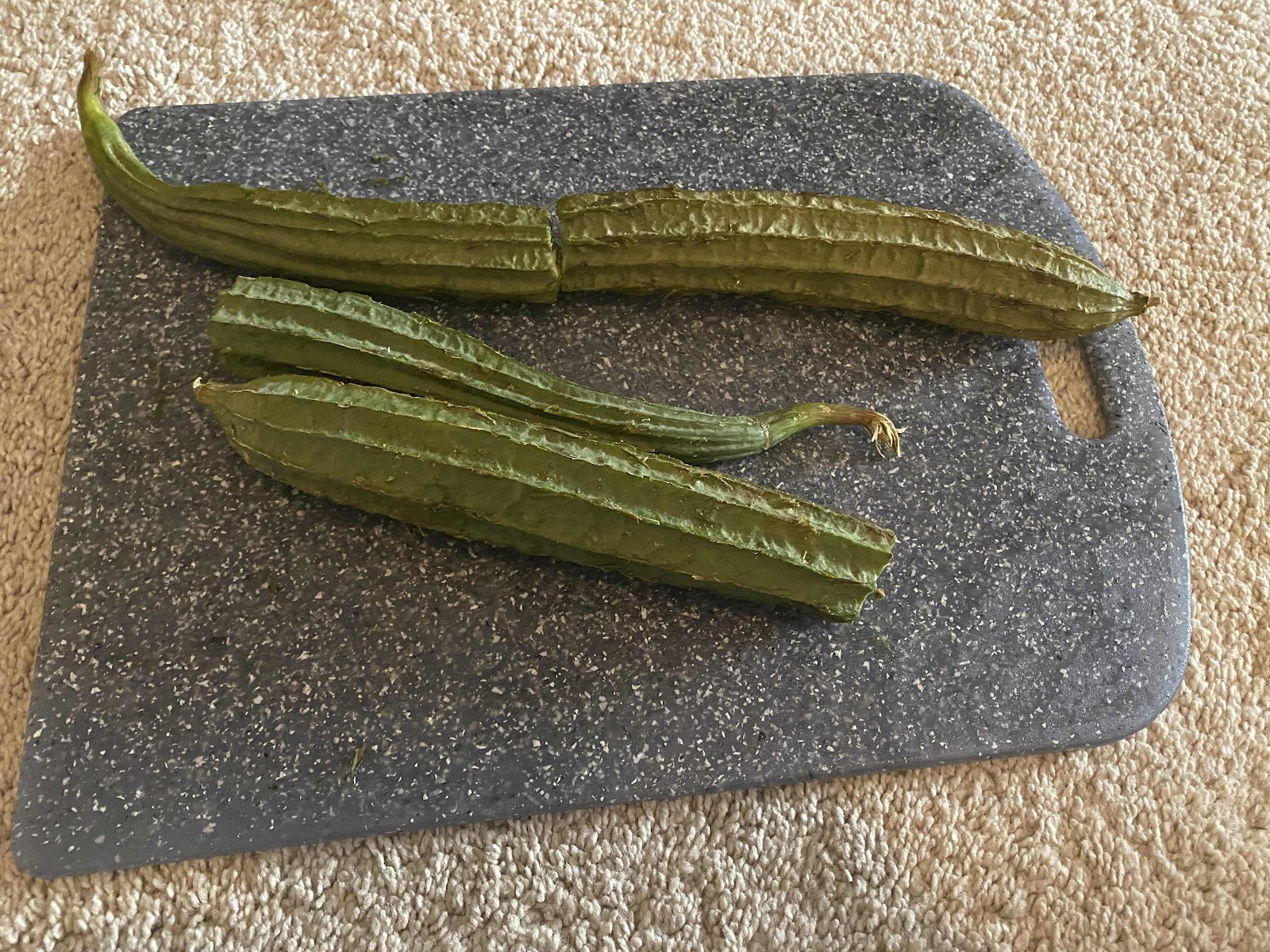
Ridge gourd is a long green vegetable. The skin is green and rough and there are these ridges which is what gives the vegetable its name. The inside is fleshy and resembles a cucumber. Typically people cook the inside of the gourd. However growing up my mom always used the skin to make this yummy chutney and It is one my absolute favorites! This is a chutney that can be used as a side to dosa, idli etc. it can be also used to mix in with rice or as a side with other mixed rice dishes. 


Here is a little information about 
ridge gourd


Ingredients
To grind 
Ridge gourd - 1 long 
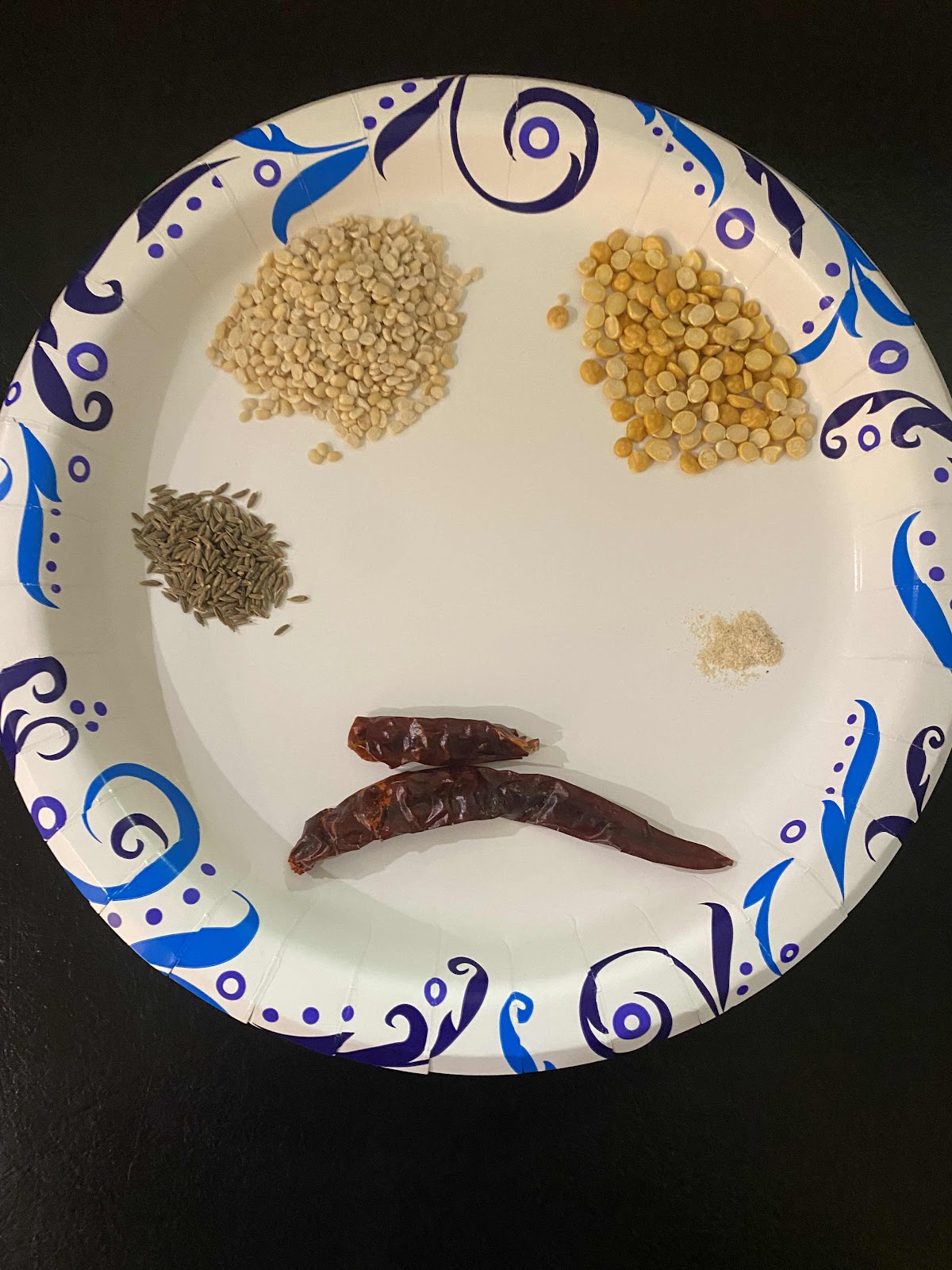
Urad dal ( dehusked split black gram) - 1 tbsp
Chana dal ( split bengal gram ) - 1/2 tbsp
Dried red chilly - 1-2 
Asafoetida - 1/4 tsp 
Tamarind paste - 1/2 to 1 tsp ( for desired tartness)
Salt to taste 
Oil for sautéing 


For seasoning 
Black mustard seeds - 1 tsp
Onion medium - 1/2 chopped into small pieces
Curry leaves - 4 or 5
Asafoetida - pinch

Instructions :
  1. Wash the gourd really well
  2. Cut the gourd into 4 pieces 

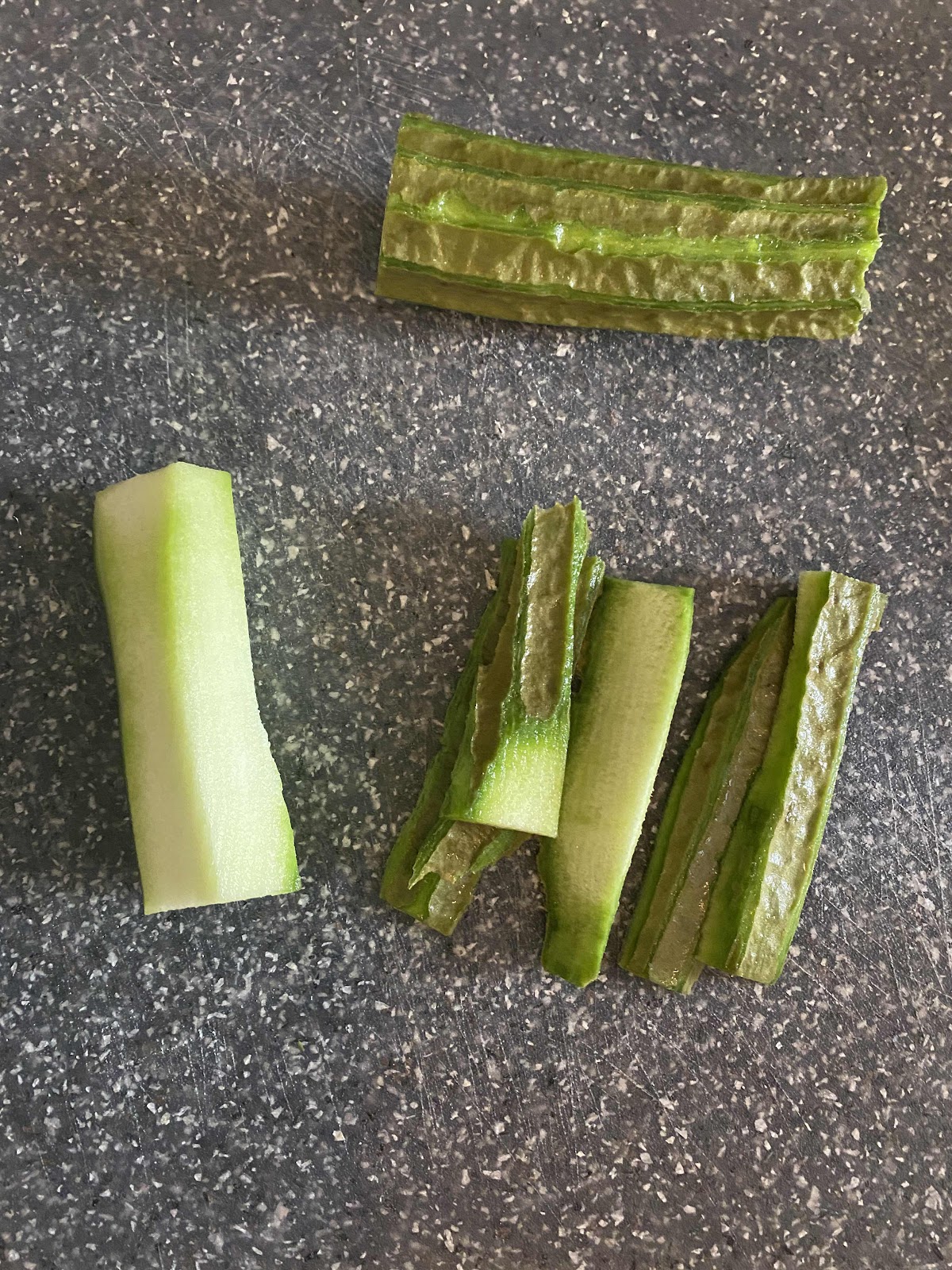
  3. First use a peeler and peel of the thin sharp ridges. These do not cook well. Discard these
  4. Then use a knife a cut the the green skin with a little bit of the white flesh stuck on to it and save these. 


  5. Then take these peels and chop them into small pieces and set aside 

  6. Place  a sauce pan on medium heat  and put a tbsp of oil in it and sauté the urad dal , chana dal, red chillies , asafoetida for a minute or two and set aside 

  7. Now put another tbsp of oil in the pan and place the cut up peels in the oil and sauté it. 

  8. Place a lid on the pan and lower the heat and let it cook for 3 to 5 minutes. 
  9. Sauté the peels until it is soft and partially cooked 
  10. Now grind the mixture of the dal and chillies in blender and then add in the peels and grind this. Add water little by little to get the chutney into a paste. 
  11. Add a small blueberry sized tamarind paste to the chutney and grind it in 
  12. Place a saucepan on medium heat and add a little oil to it, sauté onions until translucent , add the mustard seeds and let them sputter and add the curry leaves and asafoetida. Finally add the ridge gourd chutney to the mixture and sauté it until it’s light brown in color. 

  13. Peerkangai thuvaiyal is ready to serve 

Friday, December 4, 2020

Sambar

Sambar is a gravy made with dal and it is a staple in Tamil Nadu . We mix it in with rice but also we also use it as a side for idli and dosa. Any vegetable can be used in sambar. There are variations of the sambar as well. 


Ingredients:
Cooked toor dal (split pigeon peas)- 1/2 cup 
Tamarind paste - a small blueberry size ( the paste is concentrated - if you use fresh tamarind then you would soak a plum sized amount in water and get use the tamarind water)
Carrot - cut into rounds  - 1/2 cup
Drumstick ( Indian vegetable )- 8 to 10 small pieces 
Mango- cut into cubes - 1/2 cup 
Medium Onion - 1 finely chopped 
Sambar powder ( sold in stores premade, but can be made from scratch if so inclined ) - 1 to 2 tsp 
Turmeric powder - 1/2 tsp 
Coriander powder - 1 tbsp 
Besan flour - 1 tbsp 
Brown sugar- 1 tbsp 
Salt- to taste 
Vegetable Oil - 2 tbsp 
Green chilly - 1 ( deseeded and cut into a couple of pieces )
Cilantro leaves- handful 

Seasoning : 
Coconut oil / vegetable oil- 1 tbsp 
Black Mustard seeds- 1 tsp 
Fenugreek seeds - 1/4 tsp 
Curry leaves - 5 to 6 leaves 
Asafoetida - 1/4 tsp

Instructions 
  1. First cook the dal. Soak the dal in water until the water covers it. Add a pinch of turmeric powder and pinch of asafoetida and also 1 tsp of oil to it and cook it in an instant pot on the beans setting ( or cook it on the stovetop for about thirty minutes on medium to high heat until the dal is soft). Set aside. 

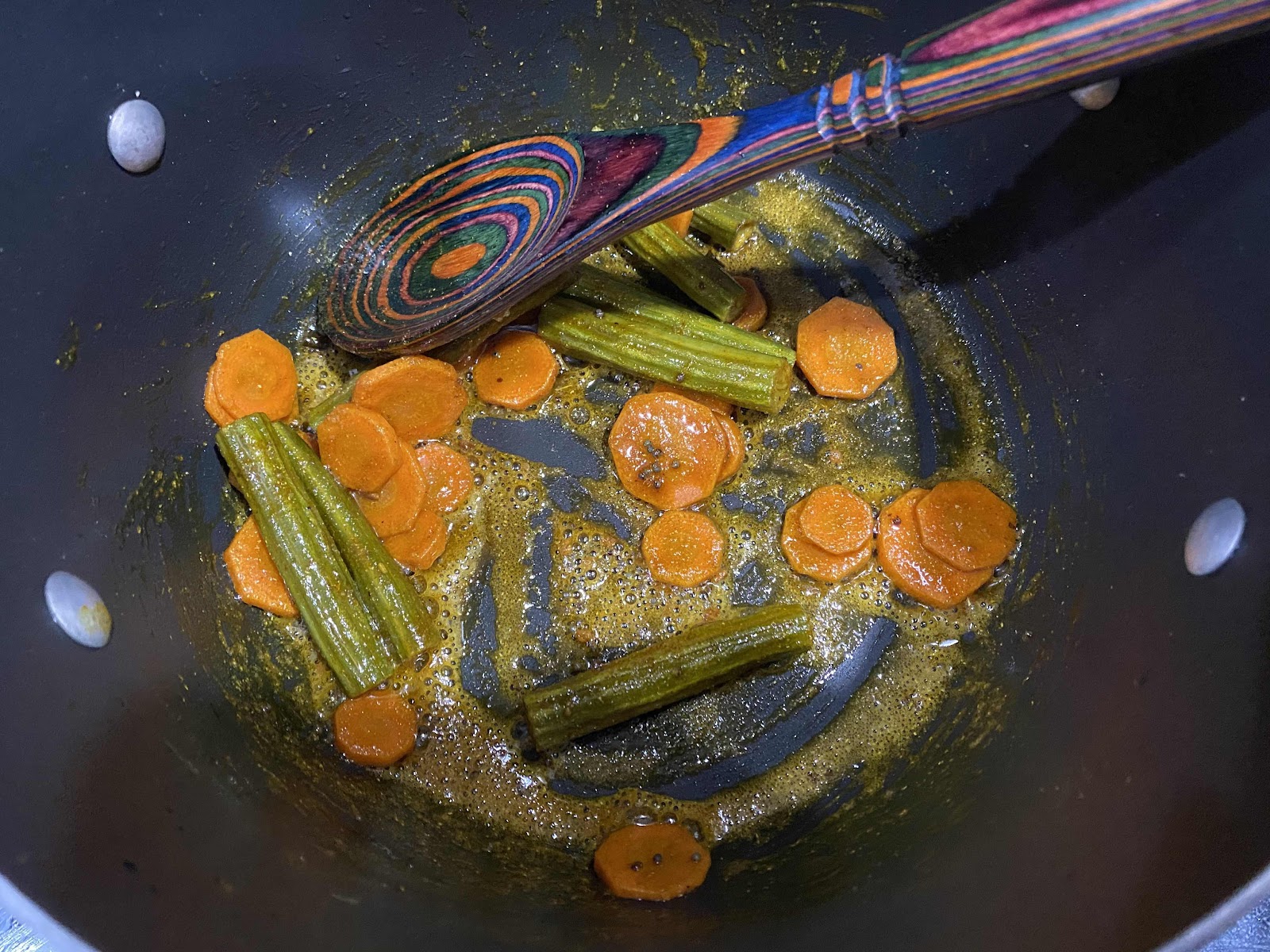
  2. Place a deep saucepan on the stove on medium heat. Add a tbsp of vegetable oil and let it heat up but not smoke. Add the chopped onion pieces and sauté until translucent, then add the green chilly and sauté it .
  3. Now add the cut vegetables and sauté it , add another tbsp of oil and now add sambar powder and turmeric powder to the oil and sauté it very well to get the raw flavor


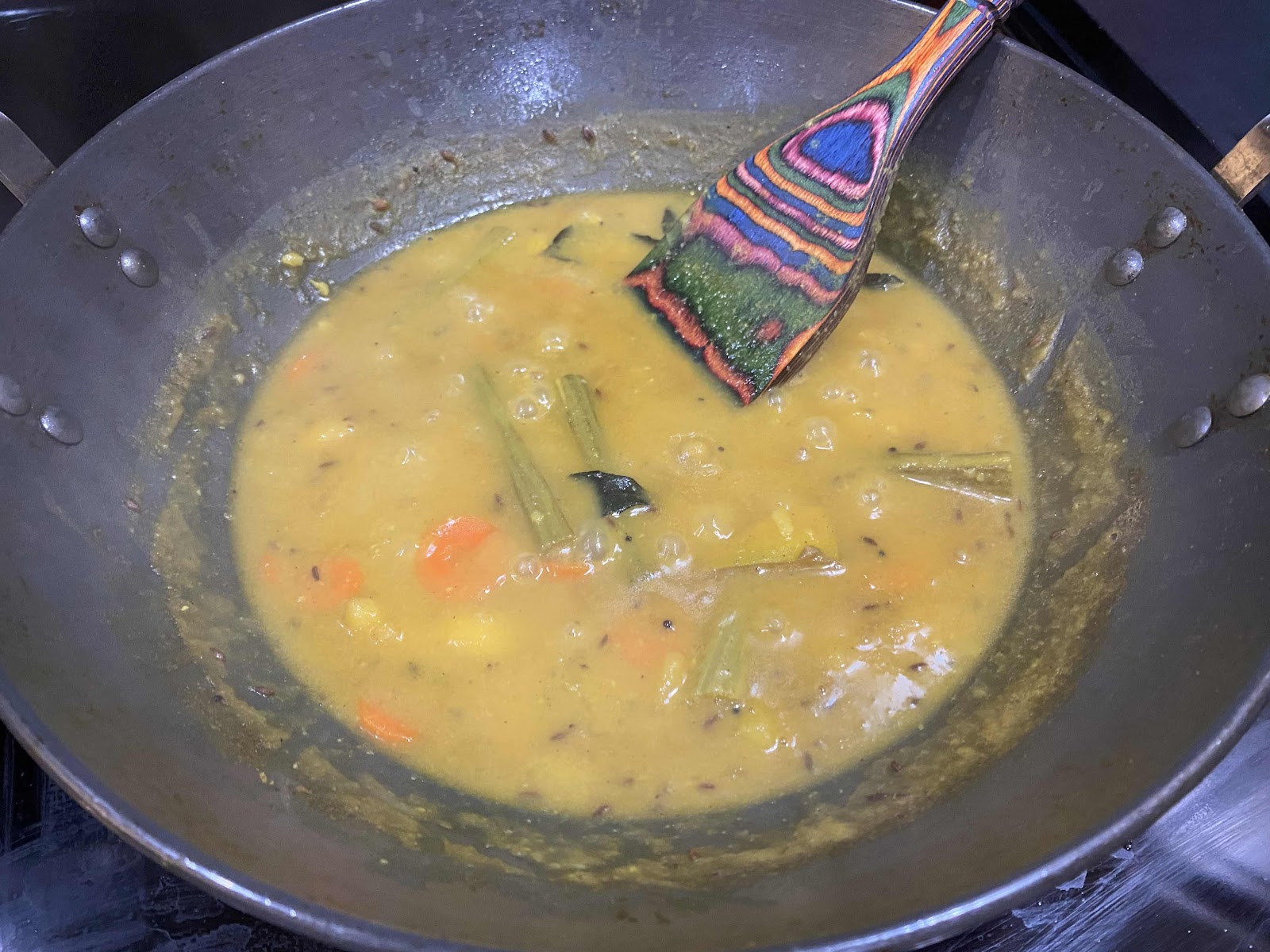
  4. Now add 2 cups of water and salt to the vegetables. Place the blueberry sized tamarind paste in the water mix it in until it is dissolved. Now place a lid on the pot and let the vegetables cook ( this might take about 10-15 min. You can poke the vegetables with a fork to check if it is soft).  Continue to cook until the raw tamarind smell is gone out. 


  5. Now add the cooked dal to the pan and mix it in. Add more water until the sambar is correct consistency - like buttermilk. 
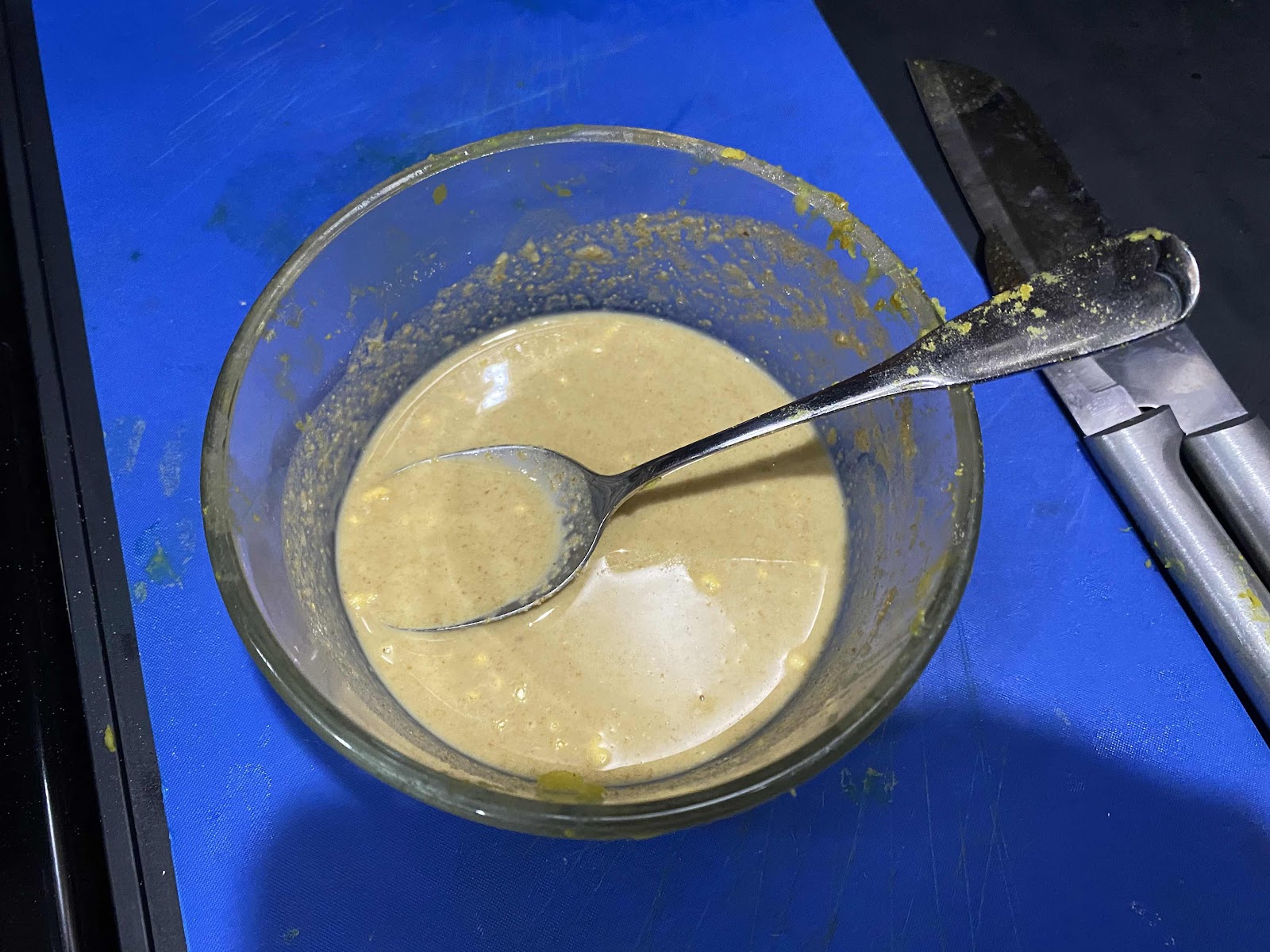
  6. In a small cup add the coriander powder and besan flour and mix in water to make a paste. Add the paste to the saucepan and let it cook. 

  7. Add brown sugar to the sambar until it dissolves. 
  8. In a separate small pan heat up the coconut oil and add the mustard seeds, fenugreek seeds and let it sputter , add asafoetida, curry leaves. This is the seasoning 
  9. Add the seasoning with the oil into the sambar , add cilantro leaves and now sambar is ready to serve 


Sunday, November 22, 2020

Raita

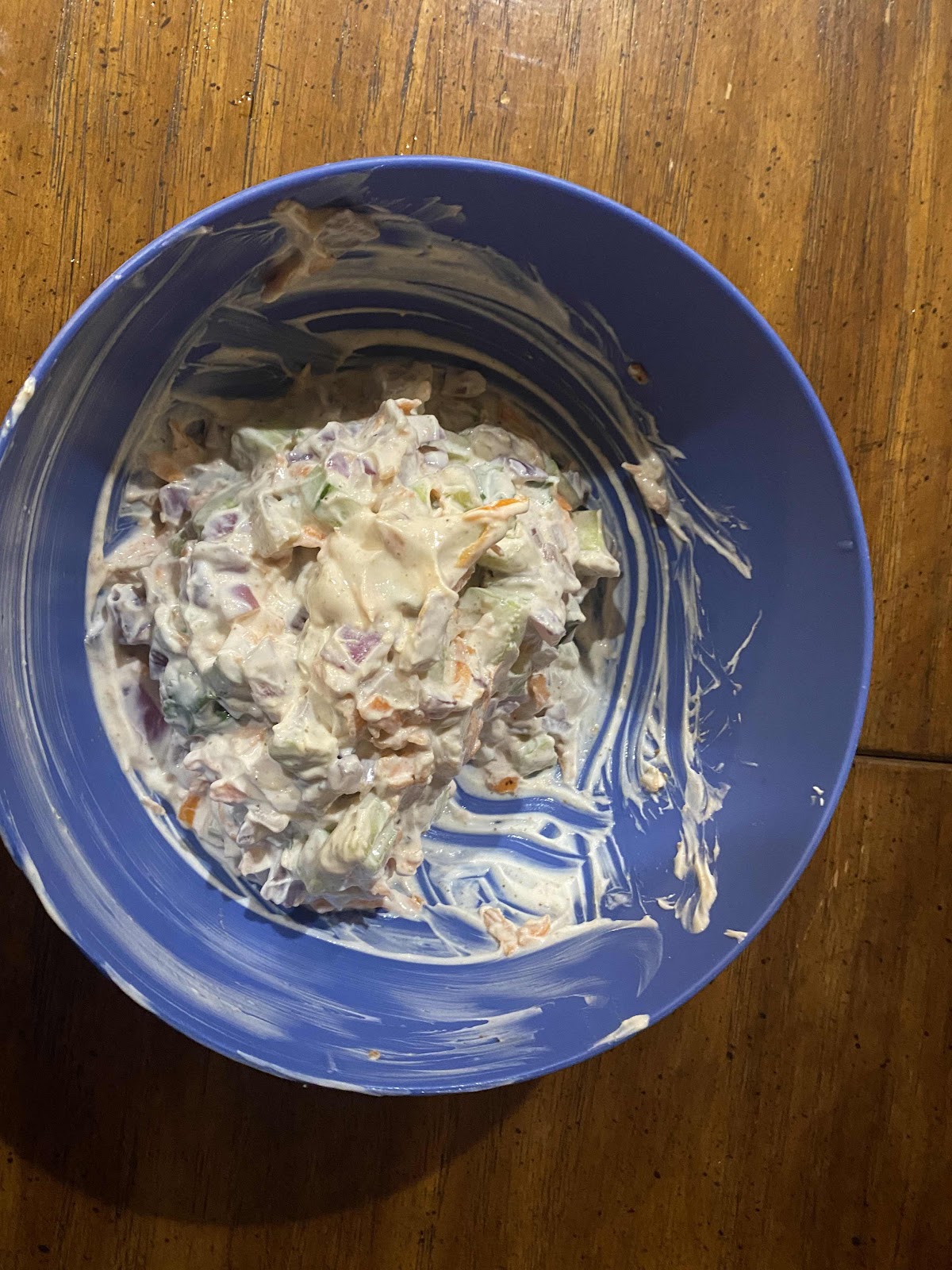
Raita is a side dish made with vegetables and yogurt or sour cream that is served with poori ( fried flatbread), chapathi ( flatbread ) or with biryani ( spicy vegetable rice). It helps cool down the palate when eating dishes that may be spicy.
Raita is one of my favorite dishes. I typically like to use cucumber in my raita. Onion is commonly used in Indian restaurants. Sometimes carrots are used. I have also seen raita with pineapple, crunchy boondi etc. in this version I have used onion , carrot , and cucumber.


Ingredients
Red onion - 1/2 chopped into strips or cubes (add salt to the onions and mix well and let it sit . It sweats it a little and you can squeeze the extra moisture out of it)
Carrot - 1/2 shredded 
Cucumber - 1 small cubed
Sour cream/ plain yogurt - 1 cup
Cumin powder - 1 tsp 
Chaat masala - 1 tsp
Cilantro leaves - a few chopped
Mint leaves- a few chopped
Salt - to taste 

Instructions 

1. In a large mixing bowl place all of the ingredients and mix together really well. 


2. This makes for a thick mixture 


3. Add water to thin this out so that it is at a sauce consistency to serve 


4. Serve with biryani , poori , chapathi , 
parotta

Saturday, October 3, 2020

Indian spicy potatoes ( potato poriyal)

I love potatoes and this Indian spicy potato poriyal is a tasty accompaniment to rice, dosa, poori or even as a breakfast side. Growing up my mom made poriyal and we ate it with paruppu rice and yogurt rice and this was a very tasty and filling meal.

Ingredients:
Potato - small 1 lb (large 1 or 2)  
Turmeric - 1 tsp
Chili powder - 1 tsp
Garam masala - 1 tbsp
Oil - 3 to 4 tbsp
Cilantro - handful of leaves 
Curry leaf- 3 or 4
Salt - to taste 
Garlic ( optional)
Water- to boil potatoes 

Instructions:
1. Wash potatoes well and place them in a pot with water covering the potatoes 
2. Add salt 
3. Bring the pot to a boil 
4. Cook the potatoes until they are slightly soft ( test with fork, you should be able to slide it in without resistance )
5. Once cooked drain the water and set aside the potatoes 
6. Once cool you can peel the potatoes 
7. Alternatives: you can peel potatoes and then boil them
You can cook the potatoes in a microwave as well
8. Cut the potatoes into 1” cubes 
9. In a saucepan add 2 to 3 tbsp of oil and heat it up 

10. Add the potatoes to the oil and ensure it is coated with oil 

11. Make a little area in the center of the pan and add another tbsp of oil and add the turmeric powder, chili powder, garam masala to it and sauté the spices in the oil. 
Tip : always roast or sauté spices in oil to avoid a raw smell/ taste from the spices 


12. Now mix the spices with the potato so all the potatoes are coated in the spice mixture. Add salt and ensure the potatoes are evenly coated
13. Allow to cook for about 5 minutes on medium heat until the potatoes brown a little at the bottom
14. Now you can turn them over and allow the other side to cook for a few minutes.
15. I typically cook them until they have a golden brown crust.
16. Add the cilantro leaves and curry leaves and mix in with the potatoes. 
17. Cook for about 1Minute until the cilantro and curry leaf are wilted 
18. Potato poriyal is ready to serve 
19. This can be eaten as a side with breakfast, dinner etc and can be eaten as an accompaniment with dosa or with rice dishes  ( yogurt rice in particular goes well with this )

Saturday, September 26, 2020

Coconut chutney


Coconut chutney is a great accompaniment to many foods. Chutney is defined a sauce/relish of Indian origin. In the US chutneys are usually associated with sweet/spicy sauces made of fruit and spices like a mango chutney which comes in a bottle like a jelly/jam. South Indian chutneys are usually savory and made from fresh ingredients. It can be served with idli, dosa, pongal, upma, bajji, vada, etc. It really is a versatile side dish and it is very tasty. There are many variations of this chutney and I am going to give you the basic recipe for coconut chutney made with green chillies.

Ingredients:

coconut ( grated)- 1 cup

green chillies ( small indian/thai green chillies) – 2 (de-seeded if you want it less spicy)

Roasted skinned split chickpeas ( pottukadalai/ Channa dal/bengal gram)- 1 to 2 tbsp

Salt – 1/2 tsp (to taste)

Water – as needed

Optional:

Tamarind paste – a pea size glob ( or a pea size of real tamarind fruit)- you can add this to the chutney so it keeps for a few days to prevent it from spoiling

Garlic – 1 to 2 cloves — you can add this to the chutney if you love garlic

Ginger – 1 inch piece – you can add this to the chutney if you want a little zing

In the place of green chillies

dried red chillies- 1 large or 2 small to get a red chutney

Black peppercorns- 1 tsp – to get a peppery chutney

There are numerous other variations to chutney .

To garnish:

Black mustard seeds- 1/2 tsp

Urad dal ( split skinned black gram)- 1/2 tsp

Asafoetida – 1 pinch

Curry leaves – 5 to 10

Oil – 1 tbsp

Instructions:

  1. Grind the coconut , roasted split chickpeas, green chillies, salt ( and tamarind) together in a blender. Add a little water to start with and add more water as you go depending on if you want the chutney coarse/thick or thin/ watery.


  2. Place this chutney in a bowl and taste it and add additional salt and mix well
 3. Now in a separate small pan add oil and heat it up. Add the mustard seeds, urad dal, asafoetida, and curry leaves to the oil until they sizzle / sputter ( just a few seconds) without burning them and add this mixture to the chutney and mix well.


4. Coconut Chutney is ready to serve as an accompaniment with your dish !